


Jan 26, 2026 | Boston Business Journal
With high vacancy rates across Greater Boston, life sciences companies have their pick when it comes to signing new leases.
In spite of all the options on the table, the biotech mecca of Cambridge continues to draw the most lab leases, both by sheer number of deals and by square footage. Four Cambridge zip codes accounted for 22 leases totaling 1.23 million square feet in 2025, according to JLL research.
The largest Cambridge lease was for the 580,000-square-foot tower Biogen plans to consolidate its Cambridge operations into at 75 Broadway in Kendall Square.
In recent years, the competition for tenants has gotten even tighter with the rise of new lab buildings in Watertown, Waltham and Boston.
Ten years ago, Cambridge would be netting three-quarters of the urban lab deals, said Mark Bruso, who leads the JLL New England research team. Now, he said, the idea of “it’s Cambridge or bust” is not necessarily the mindset anymore as new lab clusters emerge.
In fact, until a flurry of deals in Cambridge in the last six weeks of 2025, the competition between the top zip codes was even tighter, Bruso said.
Watertown and Boston both saw 11 new leases in 2025 totaling 355,571 square feet and 343,878 square feet respectively. Waltham posted a smaller number of leases — nine — but they covered 379,194 square feet.
Biotech is a clustering industry. Companies tend to sign leases in areas or buildings where there is an existing biotech presence, Bruso said.
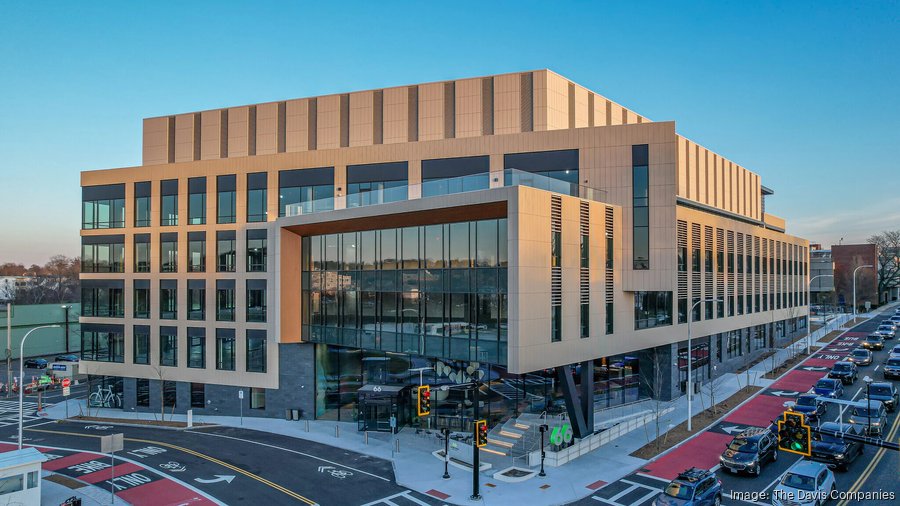
Several buildings benefited from this clustering effect in 2025, including 66 Galen Street in Watertown. The 225,000-square-foot life sciences building owned by The Davis Companies is nearly at capacity, with new tenants including Labshares and NanoDx.
BXP’s building at 180 Third Ave. in Waltham also scored several tenants in 2025, including Madrigal Pharmaceuticals (Nasdaq: MDGL), Cogent Biosciences and Amplitude Vascular Systems. The newly-built office building is known as 180 CityPoint and is part of Waltham’s CityPoint office cluster.
Companies are spoiled for choice in terms of space, with vacancy rates hovering around 30% for Greater Boston. Bruso said companies are largely leasing in new buildings built after 2020 with experienced landlords.
“As tenants have all these options on the market, why not go to the best buildings with the best landlords?” Bruso said. “It feels like that’s where our sector is headed, and that we’re going to see a lot of deals in that segment of the market moving ahead.”